What Are the Best Fuse Cutouts for 2026 Applications?
In the rapidly evolving electrical industry, selecting the right Fuse Cutouts is crucial for 2026 applications. Professionals highlight that these components play a vital role in safeguarding electrical systems. According to a report by the International Electrotechnical Commission (IEC), demand for reliable Fuse Cutouts is expected to increase by 25% in the coming years. Industry expert David Reynolds emphasizes, "The right Fuse Cutouts can prevent system failures and enhance safety."
Research indicates that the effectiveness of Fuse Cutouts significantly impacts operational reliability. They protect transformers and lines from overload and fault conditions. With the rise of renewable energy sources, proper selection of Fuse Cutouts ensures enhanced performance and longevity. However, many practitioners are still uncertain about which specific models to choose for their unique needs. This confusion warrants a careful examination of available options.
Moreover, as technology advances, so do the designs and materials used in Fuse Cutouts. Traditional models may no longer meet the efficiency standards required in modern applications. This ongoing evolution presents a challenge for stakeholders in the industry. By understanding the latest trends and innovations, professionals can make informed decisions and improve the resilience of their power distribution networks.

Best Fuse Cutouts for 2026: Industry Trends and Innovations
As we move towards 2026, the demand for advanced fuse cutouts will continue to rise. Innovations in design aim to improve reliability and safety. These trends highlight the industry’s focus on enhanced materials and smarter technologies. For example, modern fuse cutouts are being made with polymer insulators. This change helps reduce weight and improve performance under extreme conditions. It’s essential for utilities to invest in these upgrades.
The integration of smart technology is another exciting advancement. Real-time monitoring and diagnostics can help prevent failures. This shift towards automation offers significant advantages for maintenance efforts. However, industries must consider costs versus benefits. New technology can sometimes be expensive upfront. It is crucial to weigh long-term savings against initial investments.
Moreover, environmental concerns are driving innovation. Companies are testing eco-friendly materials to meet sustainability goals. This trend reflects a broader commitment to reducing the industry’s carbon footprint. As the market evolves, manufacturers must balance innovation with reliability. It's an ongoing challenge, but one that will ultimately shape the future of fuse cutouts.
Key Features of Fuse Cutouts: What to Look for in 2026 Applications
When selecting fuse cutouts for 2026 applications, several key features merit close attention. First, the design must accommodate higher voltage systems, as industry reports indicate a shift towards 15 kV ratings in distribution networks. This transition requires cutouts that handle increased loads without compromising reliability. Their ability to withstand extreme weather conditions is also crucial. In 2022, approximately 30% of outages were attributed to environmental factors.
Another vital aspect is ease of installation and maintenance. User-friendly designs reduce labor costs and minimize operational downtime. A 2023 study highlighted that efficient deployment could cut installation time by up to 25%. Additionally, consider the materials used in manufacturing. Lightweight composites are gaining popularity, yet their long-term performance in harsh conditions remains under evaluation.
Lastly, safety features are non-negotiable. Look for cutouts equipped with advanced protective mechanisms. Approximately 18% of electrical accidents relate to equipment failure, emphasizing the importance of reliable safety designs. As technology advances, continuous monitoring capabilities will also enhance operational efficiency. However, weighing the benefits against potential complexity in systems is essential.
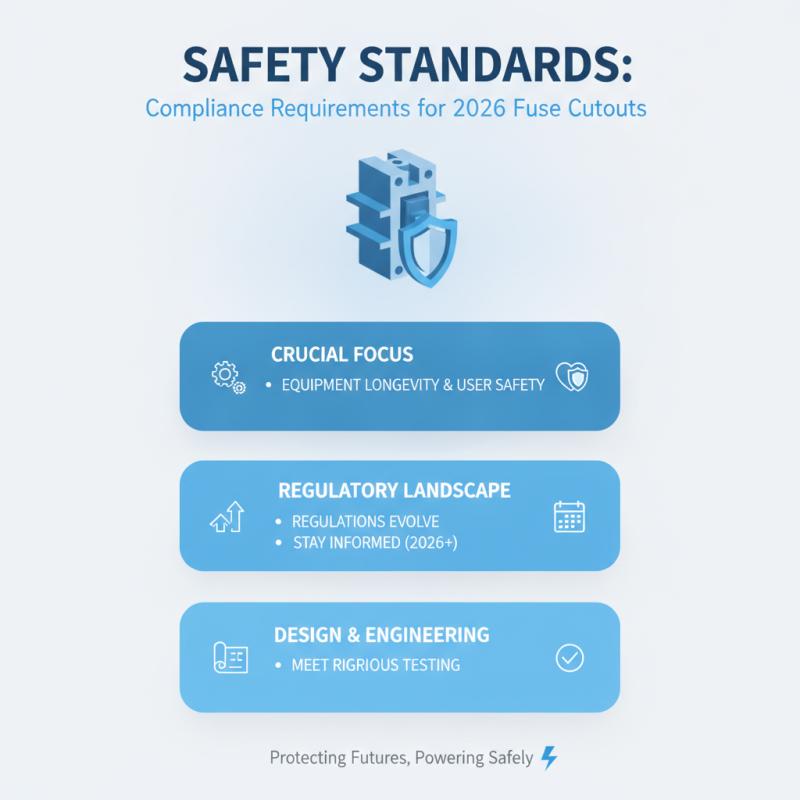
Safety Standards: Compliance Requirements for 2026 Fuse Cutouts
When selecting fuse cutouts for 2026 applications, it’s crucial to focus on safety standards. Compliance is vital for both equipment longevity and user safety. Regulations may evolve, so staying informed is essential. This allows designers and engineers to create systems that meet rigorous testing requirements.
According to existing safety standards, fuse cutouts must undergo various tests. These tests determine their performance in extreme conditions. For instance, they should withstand short-circuit scenarios effectively. Additionally, manufacturers must ensure that materials used can endure harsh weather. Identifying potential weaknesses is part of the process. It's important to reflect on how failures can impact safety.
Collaboration with safety experts enhances the evaluation process. Their insights help clarify compliance requirements. While many designs seem robust, some may overlook subtle details. Addressing these allows for more reliable applications. Continuous improvement should be the focus. The industry must adapt to changes in safety expectations and technologies. Prioritizing compliance today ensures safer and more efficient systems tomorrow.
Efficiency Metrics: Evaluating Performance in Fuse Cutouts for 2026
When evaluating fuse cutouts for 2026 applications, efficiency metrics play a crucial role. These metrics help assess performance in real-world conditions. Key performance indicators include reliability, response time, and operational capacity. A well-performing fuse cutout should ensure minimal downtime. This reliability is essential for both safety and efficiency in electrical systems.
Understanding the nuances of fuse cutouts can be challenging. Some cutouts may excel in reliability but fall short in speed. A balance between these metrics is necessary. Engineers often debate whether to prioritize speed or reliability based on specific use cases. When selecting components, it’s essential to test real-world scenarios. This can reveal performance bottlenecks that don't appear in lab settings.
Every application has unique needs. Some environments demand higher durability, while others focus on fast response. Discrepancies in materials and design can also influence efficiency. Continuous research and real-world testing are key to identifying the best options. It’s a complex process that requires careful consideration and adaptation of design choices. Understanding these elements can lead to improved system performance in the long run.
Cost Analysis: Budgeting for Fuse Cutouts in 2026 Electrical Projects
In the realm of electrical engineering, budgeting for fuse cutouts in 2026 is crucial. As project costs rise, understanding expenditure helps you make informed decisions. Industry reports suggest that the average cost of fuse cutouts may increase by 5-10% annually due to material and labor costs. This projection highlights the need for accurate budgeting.
Cost analysis reveals that fuse cutouts comprise a small but essential portion of total project expenses. Depending on application requirements, spending on these components could range from hundreds to thousands of $ dollars. A comprehensive project budget should also factor in installation and maintenance costs. According to a recent study, 30% of projects exceed their initial budget due to unforeseen expenses.
Tips: Invest time in vendor comparisons. Gathering multiple quotes allows you to identify the best value without compromising quality. A detailed budget plan should also include a 15% contingency fund for any unexpected costs. Prioritizing quality over the lowest price can prevent costly issues down the line. This proactive approach helps ensure that your electrical projects remain on track and within budget.




 Send Email
 Phone
Phone whatsapp
 Wechat
 Whatsapp