

 Send Email
 Phone
Phone whatsapp
 Wechat
 Whatsapp


Bimetallic vs. Single-Material Connectors: Pros & Cons
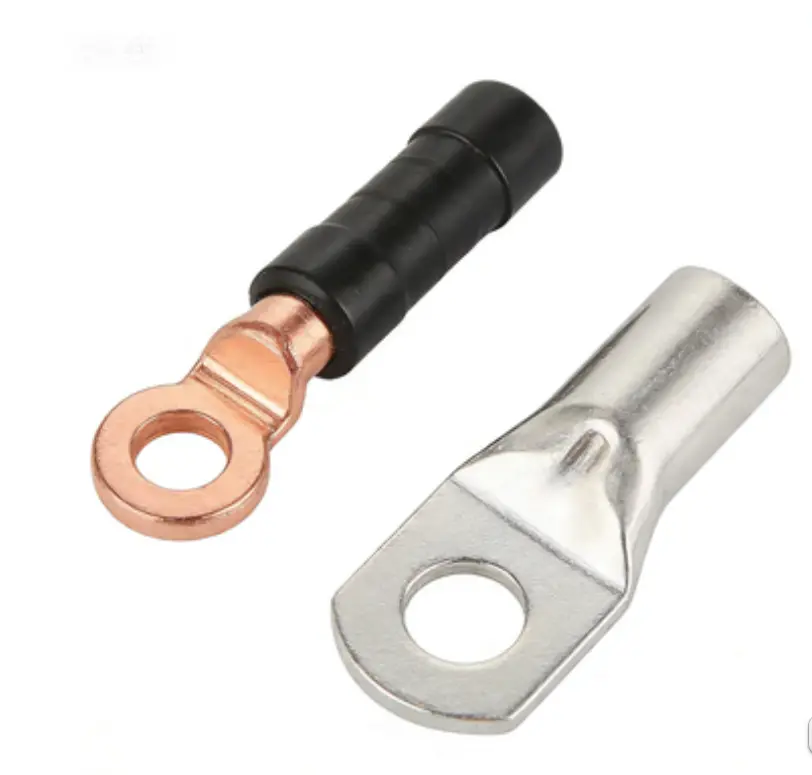
When selecting electrical connectors for industrial, commercial, or household use, performance, safety, and cost-effectiveness should be considered comprehensively. Bimetallic connectors use advanced processes such as friction welding to weld two different metals (such as copper and aluminum) together; Single metal connectors are much simpler, made of only one type of metal, such as copper, aluminum, and stainless steel can be used. Next, we will compare the advantages and disadvantages of these two connectors and help you choose the right one according to your actual needs.
The most outstanding advantage of the bimetallic connector is that it can solve the problem of electrochemical corrosion when connecting different metals such as copper and aluminum - this corrosion can lead to poor contact and equipment overheating, and in severe cases can even directly damage the equipment. It can combine the advantages of two metals: copper has good conductivity, and aluminum is cost-effective and lightweight, so it can ensure the stable transmission of current and reduce unnecessary energy loss to the greatest extent. In addition, it is compact in design, which can save a lot of space in the electrical box, and can be used in areas such as distribution, solar power stations, and industrial machinery. However, the disadvantages are also quite prominent: the production process is relatively complicated, and the initial cost will be higher. And whether it is good or not depends on whether the welding process is up to standard; If the welding quality is not good, it is easy to have the problem of layering.
The characteristics of single metal connectors are simple, affordable, and stable performance. Because it is made of one kind of metal, the initial cost is low, the production process is not complicated, and it is particularly suitable for small projects or scenes where all metal parts have the same material. This kind of connector is easy to install, maintain, and replace, and you don't have to worry about the problem of solder falling off. The dimensions are standardized, and it is convenient to buy. However, its versatility is not very good - if it is made of copper for large projects, the cost will be outrageous; Replace it with aluminum, which has poor conductivity and is easily corroded when used with other metals. In addition, in environments with large temperature differences or strong vibrations, its performance is also inferior to that of the bimetallic connector.
Therefore, although the initial investment of the duplex connector is high, it is still the first choice if you need to connect different kinds of metals, transmit a large current, or pursue long-term stable use. Single-metal connectors are more suitable for scenarios with limited budgets, simple circuit structures, and the use of only one metal. When choosing, you need to consider the actual metal type, current demand, budget, and use environment to select a connector that is both safe and efficient.