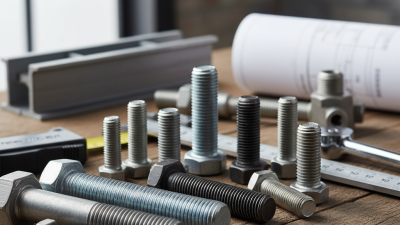
Industrial buyers rarely choose Hex Bolts by appearance alone. A bolt may look robust on a workbench, yet perform poorly when its grade, dimensions, coating, or thread fit do not match the application. Small details matter. A few millimeters can affect clearance, clamping force, and installation speed.
Bolted-joint specialist Jeffrey A. Bickford’s published work emphasizes that joint performance depends on more than the fastener itself. A practical paraphrase of that principle is: “A reliable bolted joint starts with matching the fastener to the joint.” This is a paraphrase, not a verbatim quotation. That distinction matters when technical advice is presented as expert testimony. This guide compares ten Hex Bolts options through practical purchasing questions: What loads will the joint face? Which material and finish suit the environment? Can workers install and inspect the bolt with available tools? Will replacement parts be easy to source? These questions help buyers assess strength, corrosion resistance, dimensional consistency, and value without treating one specification as universally best. A stainless bolt may suit a damp area, while a properly specified alloy-steel bolt may better serve a high-load assembly. Neither choice is automatically right. Check the application, confirm the relevant specifications, and consult a qualified engineer when failure could create serious risks. The rankings offer a starting point, not a substitute for project-specific verification. That caveat is not glamorous, but it can prevent an expensive mismatch.
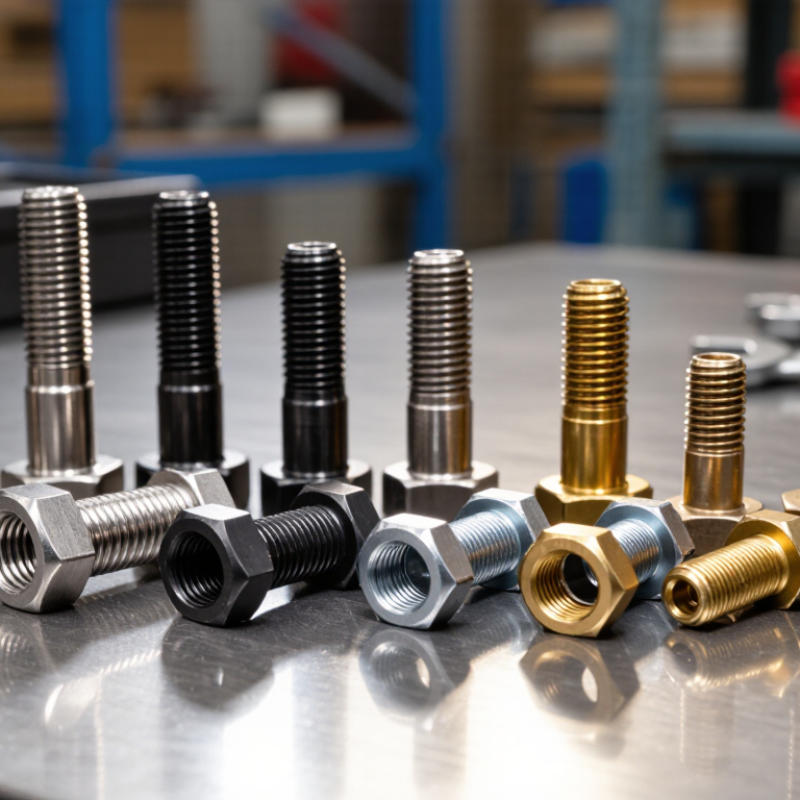
A hex bolt has a six-sided head and a threaded shank. A wrench grips the head while turning it. The threads engage a nut or a tapped hole, drawing the joined parts together. In a steel frame, for example, the bolt may pass through two aligned plates, with a washer spreading pressure beneath the head. Its key role is to create clamping force, not merely to fill a hole.
That clamping force is called preload. NASA’s Fastener Design Manual, Reference Publication 1228, describes the relationship between tightening torque and preload as T = KFd. Here, K reflects friction, which can vary with coatings, lubrication, and surface condition. The same wrench setting can therefore produce different clamp loads. A detail easy to miss.
Material markings matter, too. ISO 898-1:2013 places property class 8.8 at a nominal tensile-strength level of 800 MPa. That figure helps buyers compare mechanical classes, but it does not show whether a bolt suits every joint. Check diameter, thread pitch, grip length, mating materials, and load direction against the assembly requirements. Torque alone cannot confirm preload. Real installations can be less tidy than a specification sheet.
10 Best Hex Bolts for Industrial Buyers
Key Factors Industrial Buyers Should Assess
Selecting a hex bolt starts with the joint, not the price list. Record the load, vibration, temperature, and exposure to moisture or chemicals. Then match diameter, thread pitch, length, and head style to the drawings. Small mismatches matter. A thread that runs into the shear plane can weaken a connection.
For structural applications, check the applicable specification and lot documentation. ASTM F3125/F3125M sets requirements for high-strength structural bolts; for bolts up to one inch, its minimum tensile-strength values include 120 ksi for Grade A325 and 150 ksi for Grade A490. These are material requirements, not a guarantee that a finished joint will perform as intended. Follow the project’s installation requirements, such as those in the RCSC Specification for Structural Joints Using High-Strength Bolts. Verify head markings, certificates, and dimensions on received parts.
Corrosion protection deserves equal scrutiny. A coating can change friction during tightening, so confirm that the bolt, nut, washer, and installation method are compatible. Ask suppliers for traceable test and material records, not just a catalog description. Check a sample against the drawing with a thread gauge and caliper. Worth the extra minute. I would also revisit the specification when service conditions change; a familiar bolt is not automatically the right one.
“Best” depends on the application. The options below are representative bolt types and grades; confirm the applicable standard, dimensions, mating components, and service conditions before purchase.
| Option | Common specification | Material and strength class | Typical use | Key buyer checks |
|---|---|---|---|---|
| 1. General-purpose partially threaded hex bolt | ISO 4014; metric coarse thread | Carbon or alloy steel; property class 8.8 | Machinery, equipment frames, and general bolted joints | Check grip length, unthreaded shank length, matching nut class, and required coating. |
| 2. Fully threaded hex bolt | ISO 4017; metric coarse thread | Carbon or alloy steel; commonly property class 8.8 | Joints with variable grip length, threaded holes, or limited clearance | Confirm that threads across the joint are acceptable and that the engagement length is adequate. |
| 3. Higher-strength metric hex bolt | ISO 4014 or ISO 4017; dimensions selected for the joint | Alloy steel; property class 10.9 | High-load machinery and compact, engineered connections | Verify design calculations, compatible nuts, tightening method, and coating-related hydrogen-embrittlement controls. |
| 4. Structural heavy hex bolt | ASTM F3125 Grade A325; heavy hex structural configuration | Heat-treated carbon or alloy steel, as specified by the standard | Designed structural steel connections | Use the specified assembly components and installation procedure; do not substitute a general-purpose bolt. |
| 5. General-purpose carbon steel hex bolt | ASTM A307 Grade A; inch dimensions selected for the application | Low-carbon steel; general-purpose strength level | Light-duty fastening and noncritical equipment assemblies | Confirm the design load and environment; this grade is not a replacement for engineered high-strength structural fasteners. |
| 6. Stainless steel A2 hex bolt | ISO 4014 or ISO 4017; property class A2-70 where specified | Austenitic stainless steel | Indoor equipment and general environments with moderate corrosion exposure | Check strength requirements and galling risk; use compatible stainless mating components and suitable assembly practice. |
| 7. Stainless steel A4 hex bolt | ISO 4014 or ISO 4017; property class A4-70 where specified | Molybdenum-alloyed austenitic stainless steel | Marine, chemical, and other corrosive service where the environment is suitable | Assess the specific chemical and chloride exposure; stainless steel can still suffer pitting or crevice corrosion. |
| 8. Hot-dip galvanized hex bolt | Specification and bolt grade selected for the project; coating to the applicable requirement | Carbon or alloy steel with a zinc coating | Outdoor steelwork and assemblies requiring a thicker zinc coating | Check thread fit and compatible galvanized nuts; confirm coating and strength requirements together. |
| 9. Silicon bronze hex bolt | Order to the required dimensions and material specification | Copper-based silicon bronze alloy | Selected marine, electrical, or corrosion-sensitive applications | Compare allowable load and cost with steel options; confirm alloy, mating materials, and service compatibility. |
| 10. Brass hex bolt | Order to the required dimensions and brass alloy specification | Copper-zinc alloy; strength depends on alloy and product condition | Light-duty, corrosion-conscious, or non-sparking design applications where approved | Do not assume brass is suitable for high structural loads; verify alloy, load capacity, and applicable safety requirements. |
Industrial buyers should match hex-bolt material and grade to the load, temperature, and exposure at the installation site. Carbon steel bolts are common for strong, economical joints, but their grade markings matter: they indicate mechanical properties, not corrosion resistance. Stainless steel can perform well in damp or corrosive environments, though it is not automatically stronger than carbon steel. Fit matters. Confirm the bolt specification, nut compatibility, and required strength before ordering; a familiar appearance is not enough.
Coatings add another layer of performance. Zinc coatings can help protect steel in ordinary atmospheric conditions, while hot-dip galvanizing may suit harsher outdoor exposure. Coating thickness can affect thread fit, so check that the bolt and nut are compatible. High-strength fasteners with some electroplated coatings may require special controls against hydrogen embrittlement. Ask for product documentation, including material, grade, coating, and dimensional details. A quick rule can mislead: the “most corrosion-resistant” choice may not suit every joint or budget.
Tips: Inspect grade markings and threads on sample bolts before bulk purchase. Compare coating requirements with the actual site environment, and verify the supplier’s specifications. One detail is easy to overlook: installation tools and torque procedures can affect joint performance too.
Representative minimum tensile strength by bolt grade (ksi)
Higher-strength grades can support greater tensile loads, but the exact minimum depends on bolt diameter and the applicable standard. Material selection and coatings also affect corrosion resistance and service suitability; confirm specifications for the intended application.
Industrial hex bolts differ in head size, thread coverage, material, and intended joint. A standard hex bolt suits general equipment frames, while a heavy hex bolt provides a larger bearing face for demanding connections. Structural hex bolts are made for steel assemblies; confirm the specified grade and installation requirements instead of choosing by appearance. Flange bolts distribute pressure beneath the head, and serrated flange bolts can help resist loosening under vibration. Fit matters.
Partially threaded bolts may place a smooth shank across a shear plane, while fully threaded bolts accommodate varied grip lengths. Fine-thread bolts allow precise adjustment in suitable applications, but their threads must match the mating parts. Stainless steel bolts offer corrosion resistance, whereas high-strength alloy-steel bolts are selected for mechanical demands and may need suitable protective coatings. That makes ten useful types, not ten interchangeable choices.
For a real comparison, check diameter, thread pitch, bolt grade, coating, and joint material. A bolt that fits a hole may still be wrong for the load. Follow the equipment specification for tightening; excessive torque can damage threads or distort parts. In practice, this comparison has limits: vibration, temperature, and maintenance access can change the best choice. A quick visual check is not enough.
Industrial hex bolts should be selected as part of a joint, not by diameter alone. Start with tension, shear, fatigue, and clamp-load requirements; then check grade, thread engagement, and washer support. ASTM F3125 covers structural bolt grades, while the RCSC 2020 Specification gives installation guidance for structural steel joints. These references help distinguish structural connections from ordinary equipment fastening. Fit matters. A short-threaded bolt may behave differently from a fully engaged fastener under repeated vibration.
Exposure changes the choice. Salt spray, washdown chemicals, heat, and trapped moisture can attack coatings or promote galvanic corrosion between dissimilar metals. Match the bolt material and finish to the mating parts, then inspect the joint after service; a catalog description cannot capture every crevice. NASA’s Fastener Design Manual, Reference Publication 1228, reports that torque-based tightening can produce roughly 25% preload variation as friction changes. That matters on vibrating pumps and conveyor guards. Torque is convenient, but it does not directly measure bolt load. Use calibrated tools and specified lubrication, then verify critical joints with an approved tension-control method. Real equipment is rarely as clean as the drawing.