Leave Your Message
Online Inuiry
53d365b3-6f89-4893-96a3-d70d895f9b81Wechat
27d442a5-5d9b-4e33-a816-996fe42856d8Whatsapp
6503fd048f54d46697

2026 Top Polymeric Insulator Types for Global Buyers

The 2026 global insulation market is becoming more demanding, not merely larger. Buyers now compare material performance, manufacturing consistency, climate resistance, and verified service history. A Polymertic Insulator may look excellent in a catalogue, yet fail early under salt fog, dust, ultraviolet exposure, or repeated temperature changes. That difference matters.

Dr. A. H. El-Hag, a recognized researcher in outdoor insulation, has stated, “A polymeric insulator must be judged by its service environment, not by appearance alone.” This principle should guide every purchasing decision. Silicone rubber remains a leading choice for coastal and polluted areas because its hydrophobic surface can reduce wetting risks. EPDM offers useful mechanical strength and weather resistance, while epoxy-based designs can support compact indoor and medium-voltage applications. Composite insulators combine a fiberglass core with a protective polymer housing, creating lighter alternatives to porcelain.

The best 2026 options will not be identical everywhere. They will match voltage class, pollution severity, wind loading, installation height, and maintenance access. Buyers should request type-test reports, routine-test records, material specifications, and traceable production data. Standards such as IEC 61109 and IEC 62217 provide valuable reference points, but paperwork alone cannot replace field evidence. Check the seal condition. Examine the shed profile. Ask how long the product has operated in similar climates.

Cost remains important. It should not dominate the decision. A cheaper unit may demand earlier cleaning or replacement. That calculation is often missed. Even experienced buyers can overlook local contamination patterns. This guide compares the top Polymertic Insulator types for 2026 with a practical, evidence-focused approach, while acknowledging one uncomfortable truth: laboratory confidence does not always predict every field reality.

2026 Top Polymeric Insulator Types for Global Buyers

What Polymeric Insulators Are and Why They Matter in 2026

What Polymeric Insulators Are and Why They Matter in 2026

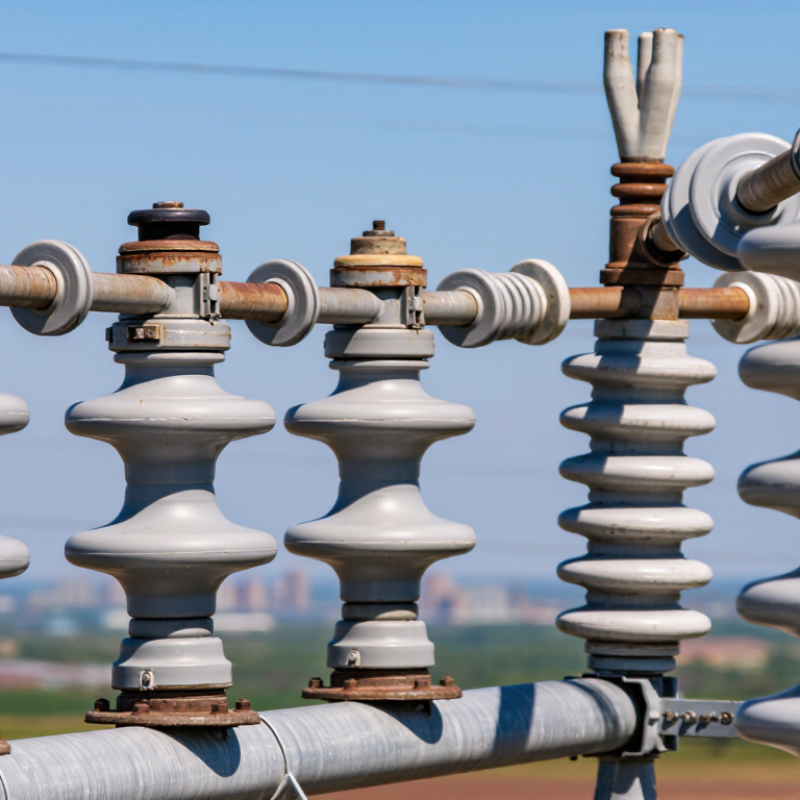
Polymeric insulators combine a fiberglass-reinforced core with weather-resistant polymeric housing. Silicone rubber, EPDM, and specialized hybrid compounds are common material choices. The housing carries sheds that repel water and reduce leakage current across polluted surfaces. This design is lighter than traditional porcelain and simplifies installation on remote transmission structures. That matters.

In 2026, global buyers are comparing polymeric insulators for overhead lines, substations, rail systems, and renewable-energy connections. Their value becomes clear near coastal roads, dusty industrial zones, and high-altitude corridors. Hydrophobic surfaces can limit flashover risk when salt or grime covers the sheds. However, performance depends on formulation, shed geometry, core protection, and manufacturing quality. A low purchase price can hide weak sealing or uneven interfaces. Field inspections often find damage around fittings rather than the visible sheds.

Reliable procurement requires documented mechanical tests, electrical withstand results, aging evaluations, and traceable quality control. Buyers should check compliance with relevant IEC or national standards, including pollution and weathering tests. Installation records also matter because poor handling can nick the housing before energization. These products are often described as maintenance-free. That claim needs caution. Periodic visual checks still help identify cracking, contamination, loose fittings, or animal damage. Design decisions should reflect local climate data, not only catalog ratings. Even experienced teams can misjudge unusual pollution mixtures or rapid temperature changes. The better question is not whether polymeric insulators are modern, but whether their tested design fits the line’s actual environment.

The Main Types of Polymeric Insulators for Global Buyers

Polymeric insulators are becoming important for global grid expansion. Mordor Intelligence’s 2024 market report estimates the sector could grow from about USD 10.6 billion in 2024 to USD 14.5 billion by 2029. The main types differ by voltage, structure, and pollution exposure.

Silicone rubber suspension and tension insulators suit overhead lines with coastal salt or industrial dust. Their hydrophobic surfaces can reduce leakage current. EPDM insulators offer strong weather resistance and are often used in medium-voltage distribution networks. However, silicone generally performs better when surface contamination is severe. Line-post and pin types support conductors rigidly. Station-post designs serve substations, while hollow-core types support instrument transformers and cable terminations.

Designers should check more than catalog voltage. IEC 61109 addresses composite suspension and tension insulators, including mechanical and electrical testing. CIGRE technical guidance highlights tracking, erosion, interface sealing, and long-term aging. These details matter in humid climates. They also matter in dry deserts.

A buyer should request salt-fog results, cantilever strength, housing material, and inspection records. The stated creepage distance may not match actual field performance. That is an easy mistake. Polymer aging remains difficult to predict because ultraviolet exposure, temperature cycles, and installation quality interact. Local utility experience should therefore influence the final selection, not only market forecasts.

Key Materials and Design Features Across Insulator Types

Polymeric insulators combine a lightweight core with a weather-resistant polymer housing. The core is usually fiberglass-reinforced epoxy, providing tensile strength and controlled mechanical flexibility. Silicone rubber remains popular because its hydrophobic surface helps water form separate droplets. This feature can reduce leakage current during rain and salt contamination. EPDM-based housings can also perform well, but their resistance to ultraviolet exposure requires careful formulation and testing. Material choice is never cosmetic.

Design details often decide service life. Deep sheds increase the creepage distance between energized and grounded parts. Alternating shed diameters can improve drainage and reduce bridging during heavy pollution. A bonded interface between the housing and core must limit moisture movement. Poor sealing may create hidden damage before external cracks appear. Compression fittings and end hardware should distribute mechanical loads evenly. Small stresses matter.

Global buyers should compare tensile ratings, cantilever strength, tracking resistance, and aging data. Testing under heat, ultraviolet radiation, salt fog, and sudden temperature changes reveals weaknesses. Field inspection remains important. A clean laboratory sample may not represent dust, bird deposits, or industrial chemicals. I have seen apparently strong designs lose performance because drainage paths were too shallow. This is an uncomfortable lesson. Standards provide a baseline, not a guarantee. Procurement teams should request traceable test reports, installation guidance, and maintenance records. They should also question assumptions about climate, pollution severity, and line loading. The best polymeric insulator is not always the lightest one.

2026 Top Polymeric Insulator Types for Global Buyers - Key Materials and Design Features Across Insulator Types

Polymeric Insulator Type Primary Insulating Materials Mechanical Load Path Typical Design Features Common Voltage and Installation Context Main Advantages Key Design or Purchasing Considerations Relevant Technical References
Composite Suspension Insulator
  • Silicone rubber or EPDM weather-shed housing
  • Glass-fiber-reinforced epoxy resin core
  • Metal end fittings with sealed interfaces
The FRP core carries the tensile load; the polymer housing provides external insulation and environmental protection.
  • Alternating sheds for leakage-distance control
  • Axial tensile load arrangement
  • Crimped or mechanically fixed end fittings
  • Hydrophobic outer surface, especially with silicone rubber
Widely used on overhead transmission and distribution lines from medium voltage through extra-high-voltage systems, subject to the specified creepage, clearance, and mechanical rating.
  • Low weight compared with porcelain or glass strings
  • Good resistance to contamination flashover
  • Reduced handling and tower-loading requirements
  • Good performance in coastal and industrial environments when correctly designed
  • Verify tensile, cantilever, and torsional ratings
  • Check core sealing and end-fitting interface quality
  • Consider corona control at higher system voltages
  • Confirm UV, salt-fog, tracking, and erosion performance
IEC 61109; IEC 62217; applicable national utility specifications
Composite Tension or Dead-End Insulator
  • Silicone rubber or EPDM sheds
  • High-strength glass-fiber-reinforced epoxy core
  • Forged or cast metal fittings
The central FRP rod and end fittings form a direct tensile load path for conductor termination and angle structures.
  • Compact high-strength body
  • Longer leakage path for polluted environments
  • Conductor hardware interface for dead-end or angle assemblies
  • Optional corona rings for higher-voltage applications
Used at line ends, section points, sharp angles, river crossings, and other locations requiring high longitudinal conductor loads.
  • High strength-to-weight ratio
  • Compact compared with long porcelain strings
  • Efficient installation on difficult terrain
  • Suitable for high mechanical loads when properly rated
  • Specify maximum working load and specified mechanical load
  • Check fitting compatibility and conductor hardware dimensions
  • Review sealing against moisture ingress and stress corrosion
  • Assess dynamic loads caused by wind, ice, and conductor movement
IEC 61109; IEC 62217; applicable national utility specifications
Composite Line Post Insulator
  • Silicone rubber or EPDM housing
  • FRP rod or solid composite core
  • Galvanized, stainless, or aluminum-compatible fittings according to the installation
The core transfers cantilever, tension, and sometimes torsional forces between the conductor hardware and the pole or cross-arm.
  • Rigid vertical or horizontal support
  • Integrated mounting base or threaded interface
  • Deep or alternating sheds for pollution performance
  • Optional line-hardware and arcing-horn provisions
Common on medium- and high-voltage overhead distribution and sub-transmission lines where a rigid support is preferred to a suspension string.
  • Compact arrangement and reduced right-of-way needs
  • Lower mass than many conventional rigid insulators
  • Good resistance to vandalism and impact in many designs
  • Suitable for narrow cross-arms and compact line layouts
  • Check cantilever rating at the specified mounting height
  • Confirm conductor uplift, torsion, and longitudinal load limits
  • Evaluate shed profile for local pollution and altitude
  • Ensure base dimensions match the pole or steelwork
IEC 61952; IEC 62217; applicable national utility specifications
Composite Pin-Type Insulator
  • Polymeric weather-shed housing, commonly silicone rubber or EPDM
  • FRP or reinforced polymer internal structure
  • Metal pin or threaded mounting interface
The internal structure transfers conductor and transverse loads to the pin or pole-mounted fitting.
  • One-piece or assembled pin-mounted configuration
  • Groove or top fitting for conductor support
  • Long creepage path in a relatively short profile
  • Lightweight design for compact distribution poles
Primarily used on medium-voltage distribution lines for straight-line and moderate-angle applications, depending on the mechanical rating.
  • Simple pole-top installation
  • Low transport and handling weight
  • Good contamination performance with suitable shed geometry
  • Reduced breakage risk compared with brittle ceramic materials
  • Verify pin thread, conductor groove, and hardware dimensions
  • Check transverse, vertical, and longitudinal load ratings
  • Consider conductor diameter and tie-wire or clamp compatibility
  • Confirm resistance to tracking, erosion, and weathering
IEC 62217; applicable product and national line standards
Composite Station Post Insulator
  • Silicone rubber or EPDM external sheds
  • FRP or resin-based structural core
  • Metal base and top fittings designed for substation equipment
The composite structural body carries cantilever, compression, and limited torsional loads between busbar hardware and the support structure.
  • Rigid support for busbars, disconnectors, and conductors
  • Flanged or threaded mounting bases
  • Defined bending and compression ratings
  • Shed profiles adapted to outdoor substation pollution levels
Used in outdoor substations and switching yards across medium-, high-, and extra-high-voltage equipment arrangements.
  • Lower mass and easier handling than porcelain station posts
  • Good resistance to impact and seismic handling stresses
  • Flexible installation with different base and top fittings
  • Useful where crane access or structural weight is restricted
  • Specify cantilever, compression, and short-circuit force requirements
  • Check interface dimensions, bolt patterns, and alignment tolerances
  • Review seismic qualification where required
  • Consider long-term UV and pollution performance
IEC 62231; IEC 62217; applicable substation standards
Polymeric Outdoor Bushing
  • Silicone rubber or EPDM external insulation
  • Resin-impregnated paper, epoxy, or other internal dielectric systems
  • Conductive central conductor and graded electric-field components
Mechanical loads are carried by the bushing body, flange, conductor, and mounting assembly; the internal insulation controls the electric field.
  • Outdoor weather sheds integrated with a grounded flange
  • Capacitance grading for higher-voltage designs
  • Sealed interfaces to prevent moisture ingress
  • Optional test tap or voltage-tap arrangement
Used on transformers, reactors, switchgear, and other high-voltage apparatus where a conductor must pass through an earthed enclosure.
  • Good contamination performance with hydrophobic housings
  • Lower external weight than many porcelain alternatives
  • Improved impact resistance
  • Flexible mounting configurations for outdoor equipment
  • Match rated voltage, current, insulation level, and mounting dimensions
  • Check partial-discharge and dielectric-test requirements
  • Verify interface sealing, thermal-current rating, and short-circuit withstand
  • Confirm compatibility with the equipment tank and conductor system
IEC 60137; IEC 62217 where applicable to the polymeric external insulation
Polymeric Covered Conductor Spacer or Line Hardware Insulator
  • Silicone rubber, EPDM, or reinforced polymer body
  • Embedded metal inserts or clamps
  • Optional FRP reinforcing elements
The body supports bundled or covered conductors and transfers vertical, transverse, and limited short-circuit forces to the messenger or supporting hardware.
  • Compact spacer-body geometry
  • Multiple conductor grooves or clamps
  • Covered-conductor contact surfaces
  • Designs may include vibration-control and fault-current features
Used in covered-conductor and aerial-bundled-conductor systems, especially where reduced corridor width and improved contact protection are required.
  • Supports compact line construction
  • Helps maintain conductor spacing
  • Lower weight than many rigid conventional assemblies
  • Can reduce phase-to-phase contact risk when correctly specified
  • Confirm conductor diameter and messenger compatibility
  • Check fault-current, vibration, and abrasion performance
  • Verify clamping pressure does not damage the conductor covering
  • Review local utility requirements for covered-conductor systems
Applicable covered-conductor, spacer-cable, and national utility standards

Note: Voltage class, creepage distance, mechanical rating, shed profile, and material selection must be finalized according to system voltage, pollution severity, altitude, climate, wind and ice loading, seismic conditions, and the applicable national or international standards.

How to Compare Performance, Applications, and Service Conditions

For global buyers, polymeric insulators should be compared by service conditions, not price alone. Silicone rubber suits coastal and industrial zones because its hydrophobic surface can reduce wet pollution flashover risk. EPDM often performs well in moderate climates, but prolonged ultraviolet exposure may accelerate ageing. Cycloaliphatic epoxy offers strong mechanical rigidity for indoor and selected outdoor equipment. It is less forgiving under severe contamination.

The IEA’s Electricity 2024 report expects global electricity demand to grow by an average 3.4% annually through 2026. This growth increases pressure on compact, reliable distribution assets. Compare tensile strength, leakage current, tracking resistance, and housing design. IEC 60815 recommends evaluating pollution severity, altitude, rainfall, and washing conditions together. A 33 kV line beside a cement plant needs a different profile from a 33 kV rural feeder.

Field inspection matters.

CIGRE technical guidance emphasizes ageing checks, including chalking, erosion, cracking, and seal damage. Ask suppliers for salt-fog, tracking-and-erosion, UV, and temperature-cycle results. Check whether reported test conditions match your site. Laboratory success can mislead when dust, bird activity, and maintenance intervals differ. I would also require several years of installed-service evidence, although this data is often incomplete. That gap deserves attention. Life-cycle cost should include washing, outage exposure, replacement access, and rejected units—not only the purchase invoice.

Global Buying Criteria: Standards, Quality, Cost, and Supplier Support

2026 Top Polymeric Insulator Types for Global Buyers

Global Buying Criteria: Standards, Quality, Cost, and Supplier Support

Polymeric insulators include suspension, line-post, station-post, and pin types. Each design fits different voltage levels, structures, and pollution conditions. Buyers should request compliance with relevant IEC or regional standards. IEC 61109 often guides composite suspension and tension insulators. Test records should cover mechanical strength, tracking, erosion, and weathering. A neat appearance is not enough.

Quality depends on materials and process control. Check silicone housing thickness, core alignment, sealing details, and end-fitting crimping. Ask for batch traceability and independent laboratory reports. Site conditions matter too. Coastal salt, industrial dust, ice, and ultraviolet exposure can change performance. A checklist helps, but it cannot predict every storm.

Tips: Compare total ownership cost, not only the purchase price. Include freight, installation, inspection, and possible replacement. Request clear drawings, packing details, lead times, and technical support before ordering. Supplier support should continue after delivery. Fast answers are useful, but documented answers are safer. One weakness remains: buyers sometimes trust certificates without checking their scope. That mistake can become expensive.