

 Send Email
 Phone
Phone whatsapp
 Wechat
 Whatsapp


Common U Bolt Failure Reasons and How to Prevent Them
We all know that U-bolts are crucial components in numerous applications, especially in the automotive and construction industries, where they provide support and stability for critical parts. However, like any mechanical component, they can also malfunction.
The main reason for the failure of U-bolts is improper installation. Because if U-bolts are not tightened to the correct torque specification, they will loosen over time, causing vibration and eventually failure. Therefore, to avoid this situation, it is essential to follow our company's installation guidelines and use a torque wrench to ensure that they are tightened to the standard level.
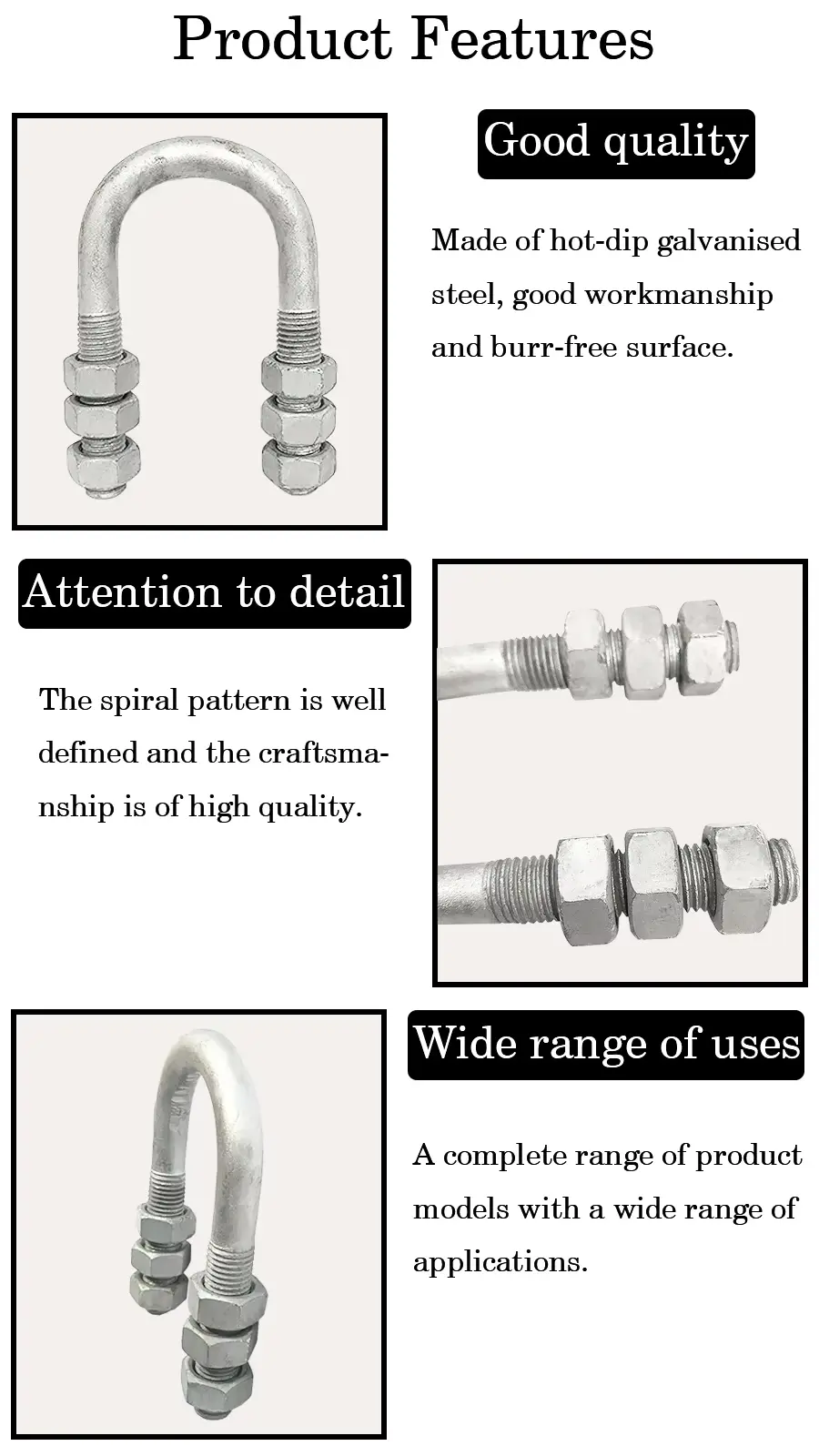
Corrosion is another important factor contributing to the failure of U-shaped bolts. Because in humid, chemical, and harsh environments, it can cause metal to rust and deteriorate in performance. Therefore, to address this issue, our staff will use U-shaped bolts made of corrosion-resistant materials, such as stainless steel or galvanized steel. Of course, they will also use protective coatings.
The most important point is that fatigue is also a common cause of U-bolt failure, especially in situations where there is continuous stress and movement. This is more common because over time, repeated loading and unloading will weaken the U-bolt, leading to cracks and eventual failure. To reduce this risk, your technicians must assess the load requirements and select U-bolts with a rated capacity higher than the actual required value. Of course, regular inspections also help to detect signs of fatigue before a failure occurs.
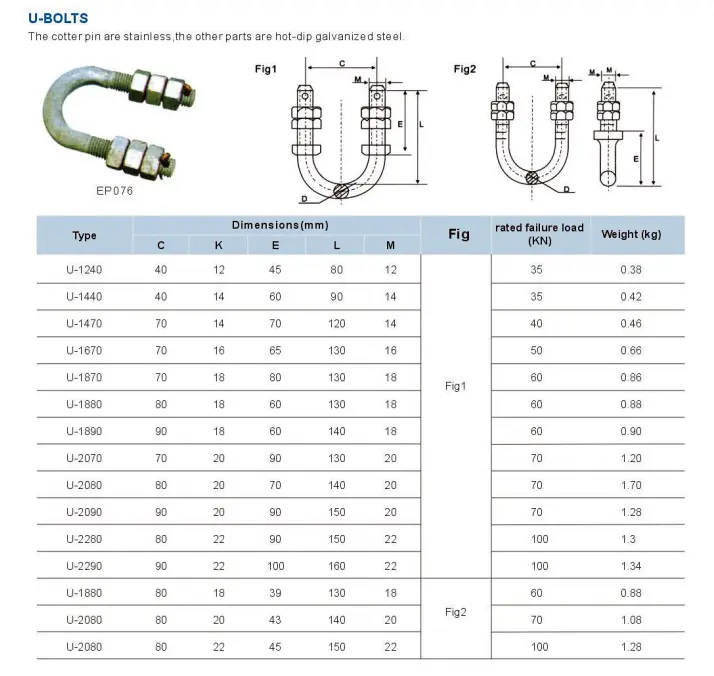
Finally, improper size can lead to the failure of U-bolts. Because if a U-bolt smaller than the applicable size is used, it may cause excessive stress, ultimately resulting in fracture. Therefore, please pay attention and ensure that the size of the U-bolt is suitable for the specific application to maintain optimal performance.